
Industrial Robots
4 articles

How Industrial Robots Learn New Skills from Factory Workers: Architectures, Learning Loops, and Limits
Industrial robots are learning new skills from human factory workers through layered cognitive architectures and iterative learning loops. This human-guided approach enhances adaptability in dynamic manufacturing environments by addressing safety and qualified data challenges.
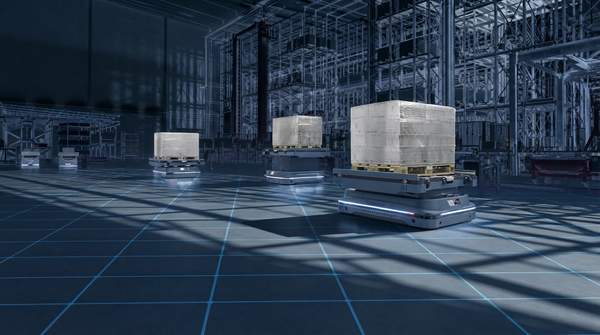
Choosing Between LiDAR, Visual, and Multi-Modal SLAM for Your Industrial Mobile Robot
Choosing the right SLAM system for industrial mobile robots involves balancing accuracy, computational cost, and environmental robustness. Key factors include LiDAR for precision, Visual SLAM for budget constraints, and multi-modal fusion for maximum resilience against lighting and dynamic objects.
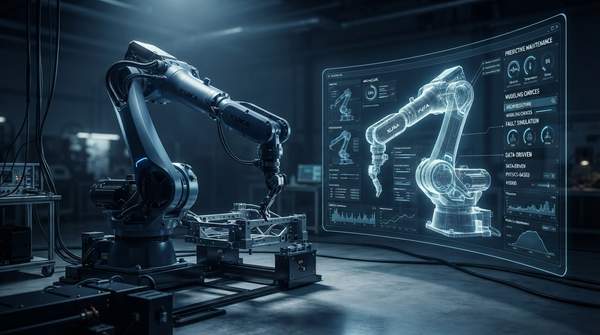
Digital Twins for Industrial Robots: Architecture, Modeling Choices, and the Path to Predictive Maintenance
A digital twin for an industrial robot is a high-fidelity simulation that mirrors the physical machine, enabling predictive maintenance by detecting deviations and simulating fault conditions. The most practical approach combines physics-based modeling for generating synthetic fault data with data-driven machine learning for real-time monitoring, overcoming the challenge of scarce real-world fault data.

North American robot orders up 21% in Q2, non-automotive leads
After a sluggish start to the year, North American companies ordered 8,940 robots valued at $622 million in the second quarter of 2026, marking a 21.