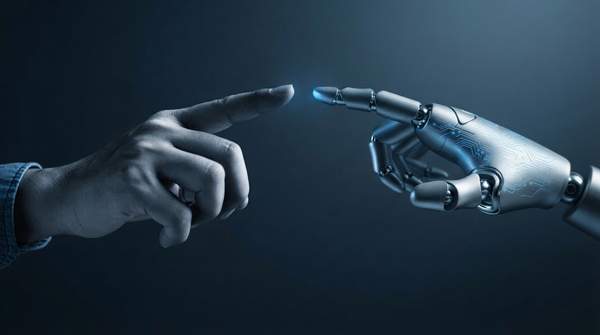
Industrial robots acquire new skills from human workers through layered cognitive architectures that convert demonstrations, corrections, and feedback into adaptable behavior. Rather than being programmed line by line, these systems run a repeating loop: a person shows or guides the task, the robot captures qualified physical-world data, a learning model adapts, the robot executes, and the human corrects what goes wrong. Research on human-robot collaboration in manufacturing shows this approach is driven by two hard problems: keeping people safe near moving machines, and the scarcity of high-quality data that reflects how tasks are actually performed.
The Imperative for Human-Guided Robot Learning in Industry
Traditional industrial robots excel at repeating fixed motions, but they struggle in dynamic environments where tasks, parts, and layouts change frequently. A study on human-in-the-loop robot learning in smart manufacturing argues that robots guided by humans can rapidly learn new tasks from just a few teachings, which matters in settings where robots must adapt to new tasks often. The same approach, the researchers note, transfers skills from generalized contexts to specific manufacturing settings using limited datasets, addressing the intricate tasks prevalent on real factory floors.
The data problem is equally central. FMC³ Robotics, which describes its Doceo system as an "industrial learning loop" connecting real-world task demonstrations with AI model development, validation, and subsequent robot operations, frames the bottleneck precisely. "The real shortage is not data in general," says Dr. Joachim Fetzer, president of Europe at FMC³ Robotics. "It is qualified physical-world data that reflect how a task is actually performed in a certain environment: the movement, physical interactions, process sequence, quality outcomes, and also the errors and corrections."
Safety concerns have historically limited close human-robot collaboration, with potential collisions posing injury risks to operators, as a review of socially adaptive cognitive architectures for industrial human-robot collaboration explains. The emergence of collaborative robots, or cobots, now permits safer and closer interaction, opening the door to learning systems that treat the human worker as a teacher rather than a hazard to be caged out.
Layered Cognitive Architectures for Human-Robot Collaboration
The most detailed architectural model in the research literature is DAC-HRC, a socially adaptive cognitive architecture for human-robot collaboration in industrial settings. Its designers organize the system into distinct layers, each handling a different level of control and processing, from physical interaction up to abstract reasoning.
At the base, the Soma Layer integrates all sensors and effectors, forming the physical interface of the robot system and the foundation for data acquisition. Above it, the Reactive Layer provides real-time sensorimotor control, enabling immediate responses to environmental stimuli—crucial for quick, low-level physical reactions. The Adaptive Layer facilitates associative learning and allostatic control, letting the robot adjust its behavior based on experience and supporting continuous learning and self-regulation. At the top, the Contextual Layer manages abstract and symbolic manipulation, enabling context-based control, complex task planning, and understanding of broader operational contexts.
This layering is what makes human-guided learning tractable: low layers keep the machine physically safe and responsive, while higher layers interpret what the human means and turn it into reusable plans. A related prototype by François Hélénon and colleagues, presented in a Springer volume on cognitive architectures for industrial collaborative robots, pursues the same goal through interactive task learning, integrating human preferences so that non-programmer experts can teach cobots complex, personalized behaviors with natural means of communication—something the authors argue would ease the robots' long-term co-integration in industries of all sizes.
The Human-in-the-Loop Learning Cycle
Across these architectures, the learning process follows a common cyclical pattern. The flowchart below deconstructs that loop into its sequential stages, tracing how human input becomes refined robot action.
The Human-in-the-Loop Robot Learning Flowchart
Use this sequence to trace one full cycle of teaching an industrial robot a new skill. The loop is iterative: each pass through execution and feedback sharpens the skill further.
- Human demonstration or guidance. A worker shows the task physically, guides the robot's arm, issues natural-language commands, or gives preference-based feedback. Research on human-in-the-loop robot learning emphasizes that systems must handle this diverse range of interaction types.
- Data acquisition and processing. The robot captures qualified physical-world data—movement, physical interactions, process sequence, quality outcomes, and the errors and corrections the human makes.
- Model adaptation. Learning mechanisms update the robot's skill representation from this data. Because human input can be ambiguous, noisy, and variable across users, the system must adapt to different interaction styles while remaining sample-efficient.
- Robot task execution. The robot performs the task under human supervision, with the human maintaining global oversight until satisfied with the plan.
- Feedback and correction. The worker corrects failures and refines the execution plan, feeding new data back into step two. This closes the loop and lets the robot continuously refine its skills and adapt to new situations.
The correction stage is not optional polish. Work on human-in-the-loop robot learning notes that practitioners need to know how often learning systems fail, in what circumstances, and how they can be continually enhanced to address those failures. A human-in-the-loop replanning strategy developed by researchers using large language model reasoning illustrates the point: users maintain global supervision until satisfied before executing the plan, refining one-shot, video-generated robot plans through iterative feedback.
Ensuring Safety and Adaptability in Human-Robot Workspaces
Keeping a human in the loop is itself a safety mechanism. Researchers at Rice University, whose Kavraki Lab combined Bayesian inverse reinforcement learning with established motion planning techniques, report that a human in the loop augments robot perception and prevents the execution of unsafe motion. Their system, tested on a Fetch robot arm with seven joints that had to move an object past a barrier, learns from continually updated information and experience while the human retains veto authority over dangerous motion.
Adaptability in DAC-HRC goes beyond collision avoidance. In its outlined use cases, including collaborative disassembly of WEEE devices, the architecture demonstrates real-time adaptive decision-making informed directly by data gathered during human-robot interactions: the cobot's operational speed and safety distances are dynamically adjusted based on trust levels reported by the human workers. By addressing adaptation, safety, personalization, transparency, and real-time interaction, its designers propose a new paradigm for industrial human-robot collaboration.
Advancing Industrial Automation with Human-Guided Learning
Industrial manufacturers should consider human-guided learning systems as a viable approach to enhance robot adaptability and efficiency for complex, dynamic tasks. The evidence supports a clear decision boundary: fixed programming suits stable, high-volume repetition, while human-guided learning suits environments where tasks change, qualified data is scarce, and worker expertise is the richest available resource. The measurable indicator of success is increased deployment of collaborative robots capable of rapid task re-learning and adaptation in diverse manufacturing scenarios, evidenced by reduced reprogramming time and improved task success rates. Manufacturers evaluating these systems should watch exactly those two numbers as the technology moves from proof-of-concept projects to production floors.
Sources
- IRA
- FMC³ Robotics introduces Doceo system to help industrial robots learn from factory workers — Robotics & Automation News
- Socially adaptive cognitive architecture for human-robot collaboration in industrial settings - PMC
- A Cognitive Architecture for Human-Aware Interactive Robot Learning with Industrial Collaborative Robots — SpringerLink
- A Human-in-the-loop Approach to Robot Action Replanning through LLM Common-Sense Reasoning — ARXIV
- NEWS