
Jordan Adebayo
Editorial byline
Jordan Adebayo is an editorial byline for Coders & Pixels, with a focus on Career Development, Perspectives, Team Culture Case Studies. Biographical credentials and external profiles are published only after verification.
Learn more about our editorial process and use of automation in our AI & Automation disclosure.
Coverage Areas
Latest Articles

Securing Autonomous AI Agents in Multi-Tenant SaaS: A Trade-Off Framework for Isolation, Identity, and Threat Modeling
Securing autonomous AI agents in multi-tenant SaaS hinges on three core architectural decisions: isolation, identity, and threat modeling. Workload sensitivity, compliance, and risk should drive these choices, not implementation convenience, to prevent cross-tenant breaches and unauthorized actions.
Nov 11, 2026 · 6 min read

Choosing Between LIME, SHAP, Permutation Importance, and Partial Dependence Plots: A Practical Comparison
Choosing the right XAI method hinges on whether you need to explain individual predictions or the model's overall behavior. This comparison details LIME, SHAP, Permutation Importance, and Partial Dependence Plots, highlighting their trade-offs in scope, cost, and explanation type.
Nov 8, 2026 · 7 min read

Translating Zero Trust Principles into SaaS Architecture: A Principle-to-Pattern Decision Framework
Zero Trust in cloud-native SaaS is an architectural discipline requiring explicit, continuous verification for all access decisions. This article provides a decision framework mapping Zero Trust principles to concrete SaaS architectural patterns and common implementation challenges.
Nov 8, 2026 · 5 min read

How Tiered Agents and Hybrid Local/Cloud Routing Control Agentic AI Costs in SaaS
Agentic AI introduces variable, consumption-driven costs in SaaS, unlike traditional per-user models. Product managers can control these expenses by adopting architectural patterns like tiered agent hierarchies to reduce redundant context processing and hybrid local/cloud routing to optimize inference costs.
Oct 22, 2026 · 5 min read

Governing Enterprise AI Agents: A Three-Layer Architecture and an Ethics-to-Engineering Checklist
Enterprise AI agents require robust governance to prevent failures like data breaches or scope creep. This article presents a three-layer architecture and an ethics-to-engineering checklist to ensure responsible development and deployment.
Oct 22, 2026 · 6 min read

FHE for Enterprise SaaS AI/ML: How Encrypted Inference Works and What It Costs
Fully Homomorphic Encryption (FHE) enables AI/ML inference on encrypted data, preserving client privacy by allowing computation on ciphertexts. While promising for sensitive enterprise SaaS applications, FHE introduces significant computational overhead, increased data sizes, and architectural complexity that must be carefully evaluated against workload requirements and latency tolerance.
Oct 20, 2026 · 4 min read
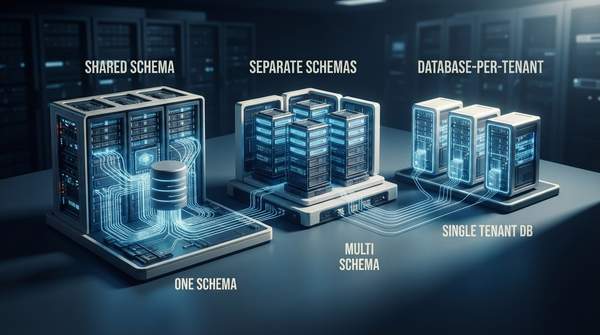
Shared Schema vs. Separate Schemas vs. Database-per-Tenant: Which Multi-Tenant Database Architecture Fits Your SaaS?
Choosing the right multi-tenant database architecture involves balancing data isolation, operational costs, scalability, and tenant customization needs between shared schema, separate schemas, and database-per-tenant patterns.
Oct 20, 2026 · 6 min read

Ethics by Design for AI: A Developer's Lifecycle Checklist for Autonomy and Privacy
Ethics by Design (EbD) integrates ethical principles like autonomy and privacy into the AI development lifecycle from the outset, treating them as core requirements. This guide provides developers with a lifecycle checklist to ensure these principles are built into AI systems from sprint to production.
Oct 19, 2026 · 4 min read

Privacy-Preserving LLMs in Enterprise SaaS: Choosing Between Differential Privacy, FHE, and Federated Learning
Enterprises can deploy LLMs in SaaS while meeting privacy obligations like GDPR and CCPA, but no single technique is sufficient. A layered architecture combining Privacy-Enhancing Technologies (PETs) with Zero Trust controls is recommended to address data exposure and ensure compliance.
Oct 18, 2026 · 6 min read

Matching Tenant Isolation and Resilience Patterns to Your SaaS Business Tiers
Resilient multi-tenant SaaS architectures are not built from a single pattern but require a tiered approach. The optimal combination of isolation and resilience strategies depends on your pricing strategy and engineering constraints, directly mapping isolation levels to price points.
Oct 17, 2026 · 5 min read

CoT, Self-Consistency, or RAG: Choosing the Right Advanced Prompting Technique for Your Enterprise LLM
Selecting the right advanced prompting technique for enterprise LLMs—Chain-of-Thought (CoT), Self-Consistency, or Retrieval-Augmented Generation (RAG)—depends on the specific failure mode you aim to address. CoT enhances reasoning, Self-Consistency boosts reliability, and RAG grounds responses in external data.
Oct 14, 2026 · 5 min read
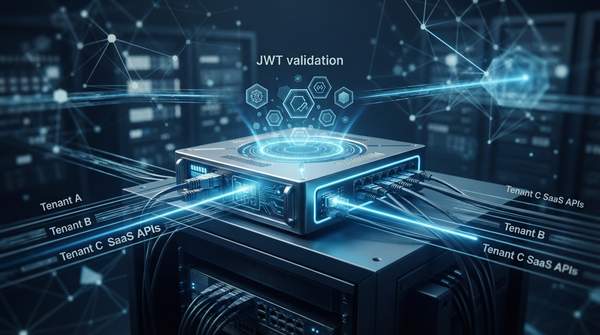
How Header-Based Routing and JWT Validation Secure Multi-Tenant SaaS APIs at the Gateway
Cloud-native API gateways secure multi-tenant SaaS applications by using header-based routing to direct requests to the correct tenant backend and enforcing policies like JWT validation at the edge. This approach provides a single control point for traffic direction and security, reducing the attack surface and improving scalability.
Oct 14, 2026 · 5 min read

Choosing Your Multi-Tenant Vector Database Architecture: Silo, Pool, or Hybrid
Choosing the right multi-tenant architecture for your vector database involves balancing data isolation, performance, cost, and operational complexity. Explore the Silo, Pool, and Hybrid models to find the best fit for your generative AI applications.
Oct 7, 2026 · 5 min read

Universal Music Group Appoints Spotify AI Veteran Òscar Celma to Drive Discovery and Personalization Strategy
Universal Music Group has appointed former Spotify AI veteran Òscar Celma as Senior Vice President, Applied AI and Machine Learning. Celma will lead UMG's strategy to enhance music discovery, personalization, and fan engagement, reinforcing the company's commitment to supporting human artistry.
Sep 29, 2026 · 4 min read

Generative AI Erodes Critical Thinking, Setting Up Long-Term Cognitive Risks
OpenAI's internal classifiers estimate that over a million users, approximately 0.
Sep 20, 2026 · 5 min read

Understanding Resilient, Inclusive Tech Cultures
Nearly 40% of U.S. workers report their employers have rolled back diversity, equity, and inclusion (DEI) practices, casting a shadow over the promise of more equitable workplaces. This retreat threat
Aug 21, 2026 · 3 min read

AI's Unchecked Power Will Outpace Our Ability to Govern It by 2026
Despite AI's growing integration into critical societal functions, a stark reality persists: there are no testing standards, no requirement for AI to explain its decisions, and no organization equippe
Aug 10, 2026 · 4 min read

How AI ML Researcher Pathways Develop Skills for 2026 Opportunities
The median total pay for an AI research scientist currently stands at $200,000, significantly outpacing many other tech roles and highlighting the immense value placed on this specialized expertise, a
Jul 16, 2026 · 9 min read

Black Box Medicine: The Three-Part Test for AI You Can Actually Trust
Medical AI systems often operate as "black boxes," posing risks to patient care and informed consent. This article outlines a three-part test—interpretability, auditability, and ethical governance—essential for building trust in AI used in medicine.
Jul 14, 2026 · 4 min read

Pope Leo XIV's Five Demands: What "Magnifica Humanitas" Says AI Must Not Be Allowed to Do
Pope Leo XIV's encyclical "Magnifica Humanitas" addresses the ethical development of AI, warning against its potential to erode human dignity. It outlines five key risks and proposes safeguards, urging global regulation and collaboration to ensure AI serves humanity's common good.
Jul 11, 2026 · 4 min read