For most consumer electronics projects, the right edge AI hardware choice comes down to four questions: how much power you can spend, how heavy your inference workload is, what your team already knows how to build, and how long the product must live. Answer those, and the architecture decision—microcontroller, system-on-chip with a neural processing unit, or FPGA—largely makes itself. This article walks through each category's strengths and trade-offs, then gives you a decision framework you can apply to your own project.
Introduction: Navigating Edge AI Hardware Choices for Consumer Electronics
AI workloads are moving from the cloud onto consumer devices, driven largely by the integration of neural processing units into personal electronics, as Futuresource Consulting's analysis of edge AI in personal electronics describes. That shift means hardware teams now face an architectural decision early in product development, when changing course is still cheap but the wrong choice is expensive to unwind.
The key insight from engineering consultancies that guide R&D teams through this process is that hardware selection is as much about your people as your processors. Etteplan, a Finnish engineering firm that publishes a structured selection framework, puts it plainly: aligning the hardware choice with your team's strengths avoids unnecessary complexity and speeds up deployment. There is no single best platform—only the best fit for a specific set of constraints.
Understanding the Core Edge AI Hardware Architectures
Microcontrollers (MCUs). A microcontroller is a self-contained CPU and memory on a single chip—essentially a tiny, low-power computer, as Edge Impulse's device-selection documentation defines it. In consumer electronics, MCUs and digital signal processors handle tasks like speech or gesture recognition in wearables and similar devices, where the data is simple: audio, vibration, or basic sensor readings. Their defining virtue is ultra-low power draw, which makes them the default for battery-operated products.
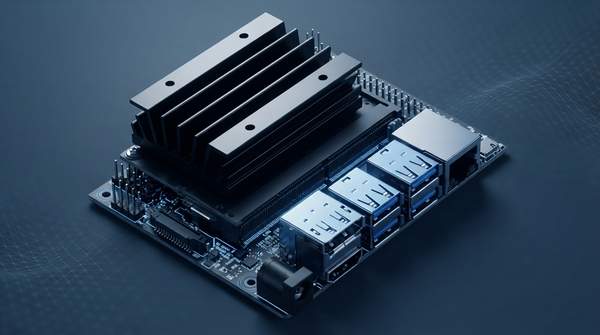
SoCs with NPUs. A neural processing unit is a special-purpose AI accelerator designed to perform neural network calculations quickly and efficiently. Edge Impulse's documentation notes that NPUs almost always require a coprocessor—an MCU or MPU—to handle general-purpose computing, and they range from tiny coprocessors integrated on the same chip as an MCU up to powerful card-based options. In practice, consumer products pair an NPU with a host SoC. Industry analysis from IDTechEx expects AI chips to spread into midrange smartphones over the next decade, using architectures that appeared in flagships of previous years—a sign of how central NPU integration has become to consumer silicon strategies.
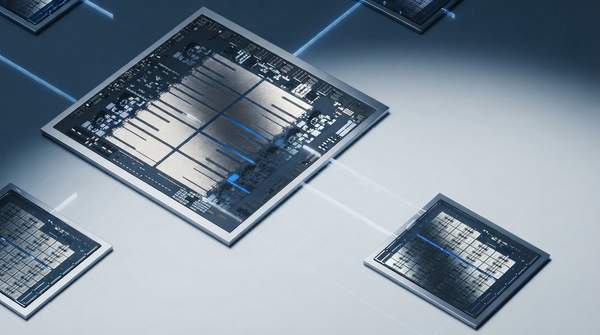
FPGAs. A field-programmable gate array can be tailored to execute specific AI model paths or inference routines with minimal power consumption, balancing speed, flexibility, and adaptability, according to Cloudian's edge AI guide. FPGAs excel where you need low latency, high throughput, or the ability to reprogram the logic in the field to support model evolution and rapid iteration. The trade-off is programming complexity—though despite that complexity, they deliver significant acceleration.