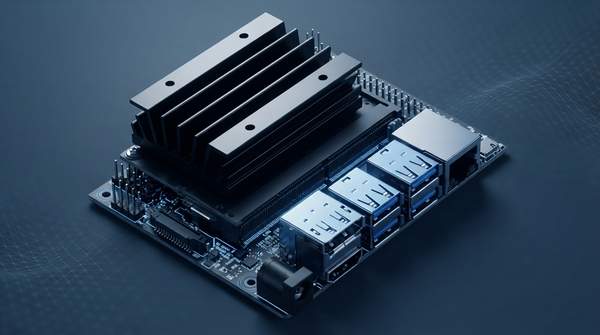
The right inference architecture for your AI feature is rarely a blanket choice: it is a per-workload decision. If your task is short, well-defined, and touches sensitive data, on-device inference is usually the better fit. If it demands multi-step reasoning, broad general knowledge, or a frontier-scale model, the cloud wins. And increasingly, the correct answer is a hybrid that routes each request based on its complexity and sensitivity — the pattern Microsoft documents for production Windows apps and that Apple and Google ship in consumer products today.
This article walks through the four constraints that actually drive the decision — latency, privacy, model complexity, and cost — and turns them into a repeatable evaluation process you can apply to any specific workload. It covers inference only, not training, and it deliberately stops short of recommending particular vendors.
The Core Trade-offs: On-Device vs. Cloud AI Inference
On-device inference runs the model locally on the device's own CPU, GPU, NPU, and memory. Its defining advantage is latency: because no data travels over a network, Silex engineer Satoru Kumashiro notes that on-device inference eliminates network latency entirely, and — critically — its performance is independent of network bandwidth and quality. That reliability point matters more than raw speed for many products: the feature behaves identically on a plane, in a basement, or on congested hotel Wi-Fi.
Privacy is the second structural advantage. Input data is processed locally without being sent over the internet, which Silex lists alongside reduced network traffic and better energy efficiency as a core benefit. For regulated data — medical, financial, legal records, or trade secrets — HP's technical explainer is explicit that on-device is the recommended path, as are scenarios where regulations like GDPR or HIPAA prohibit data export.
The costs show up in hardware and operations. Edge devices have limited processor performance and memory capacity compared with data centers hosting GPU and TPU fleets, and every deployed device must have the AI model deployed to it and maintained. Silex also flags device security: edge hardware must always be secured against tampering, and HP's guidance adds that fleets require managing thermal constraints and troubleshooting embedded systems.
Cloud inference inverts every one of those trade-offs. Network latency becomes a real variable — a concern for real-time applications — and every request sends data to remote servers, which HP notes introduces potential vulnerabilities and compliance challenges. Roboflow's comparison of cloud and on-device inference adds a concrete regulatory dimension: regulations like GDPR and the EU AI Act can create legal and operational hurdles when sensitive data leaves the device.
In exchange, the cloud removes the hardware ceiling. Frontier-scale models — Roboflow cites Qwen3-235B, with its 235 billion parameters, as an example — are easily available in the cloud and cannot be practically deployed on local devices without significant on-device hardware costs. And operationally, the cloud means zero hardware maintenance: no device fleet updates, no thermal management, no embedded-system debugging.