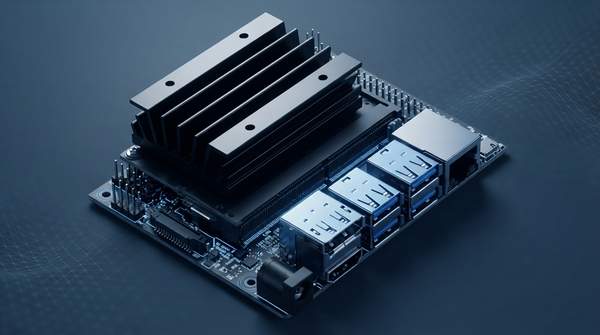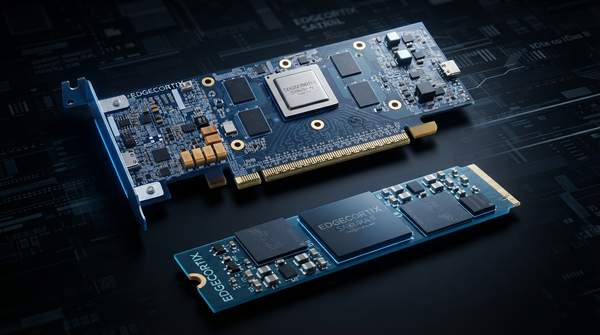
The central engineering problem in edge AI hardware is that no single design domain can be optimized alone. Chip architecture, thermal management, and physical form factor are tightly coupled: a reduced-precision compute unit lowers energy per operation, which eases thermal pressure, which relaxes the cooling budget your enclosure can afford. Get one wrong and the failure surfaces elsewhere—as throttled performance, shortened battery life, or degraded component lifespan. This article maps those connections so you can trace a design decision through to its system-level consequences.
Core Engineering Challenges: Power, Thermal, and Form Factor
Edge deployments impose constraints that data-center designs never face. Battery life is critical for mobile and IoT devices that must run for extended periods between charges, while industrial edge devices often operate under strict power envelope requirements, according to guidance from the Green Software Foundation's patterns catalog. Sustained high-power operation causes throttling that degrades performance, and distributed deployments multiply each device's consumption across thousands or millions of units.
The fundamental balancing act, as that guidance frames it, is managing inference latency and power consumption simultaneously while adapting to dynamic conditions—battery level, thermal state, and workload priority. An IEEE-published study by Prem Anand and colleagues frames the same problem as balancing energy efficiency, thermal stability, and computational performance, compounded by the sheer variety of edge workloads: models differ in size, topology, sparsity, and computational intensity. That variability pushes designers toward adaptive, workload-aware accelerators rather than fixed-function hardware.