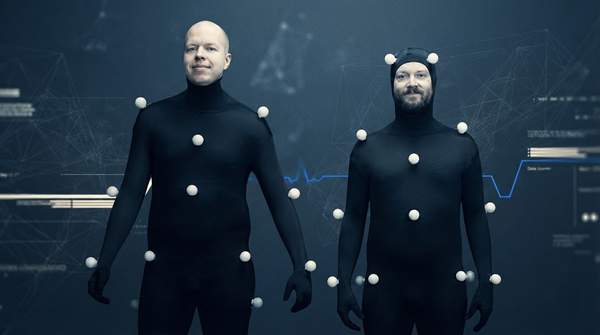
Modern game characters almost never rely on a single animation technique. The realistic movement you see in contemporary titles is typically a blend: hand-crafted keyframe or motion-captured animation supplies the personality and precision, while procedural systems—especially inverse kinematics (IK)—handle real-time reactions like planting a foot on uneven ground. Motion matching, a newer data-driven selection algorithm, extends that blend further. Choosing the right mix starts with understanding what each approach does well and where it strains.
Understanding Character Animation: Traditional vs. Procedural
Traditional animation in games means the movement is authored in advance. An animator defines key poses—keyframes—frame by frame, or motion capture records a real actor's performance, and the resulting clips are played back at runtime. Procedural animation is the opposite in spirit: motion is synthesized by algorithms in real time, without requiring pre-authored keyframes.
These two paradigms optimize for different goals. Traditional techniques give artists direct control over every gesture, which matters enormously for expression and polish. Procedural techniques give the engine the ability to respond to forces, obstacles, and player input as they happen. Neither replaces the other; most production work falls somewhere in between, as MoCap Online's guide to procedural animation puts it, blending procedural techniques with pre-authored or motion-captured animation.