Home Depot has acquired SIMPL Automation, a Waltham, Massachusetts-based warehouse automation startup, in a deal announced April 15, 2026 that the company says will accelerate supply chain automation and strengthen its same-day and next-day fulfillment strategy. The acquisition follows a successful pilot of SIMPL's technology at Home Depot's Locust Grove, Georgia distribution center, where it delivered faster pick speeds, faster cycle times and fewer product touches. Financial terms were not disclosed.
Home Depot Acquires SIMPL Automation to Boost Supply Chain
The home improvement retailer described SIMPL as a leader in automation and technology systems that uses advanced engineering and AI to help distribution facilities operate faster and more efficiently. Home Depot's announcement framed the deal around three outcomes: accelerating its same-day/next-day fulfillment strategy, improving safety inside distribution centers, and increasing speed so that "distribution center associates can work smarter, not harder."
Third-party reporting adds context to the young company's trajectory. According to reporting from the National Association of Wholesaler-Distributors, SIMPL was founded in 2023 by Nicholas Gordon and announced its ADAPTIV automated storage and retrieval system (ASRS) in early 2025. Staples was also piloting SIMPL's ASRS technology at its Montgomery, Alabama facility as of last summer, indicating the startup had begun building a commercial footprint beyond Home Depot before being acquired.
SIMPL's Core Technologies: ASRS and AI for Warehouse Efficiency
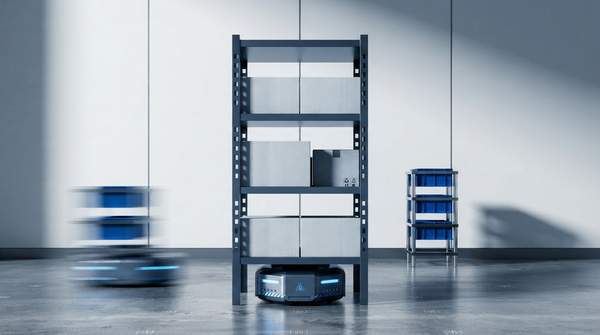
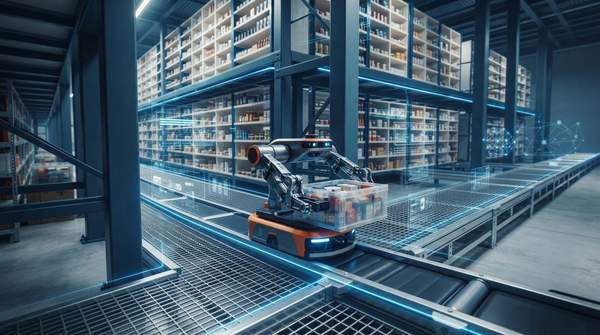
At the heart of the deal is SIMPL's ADAPTIV ASRS, an automated storage and retrieval system that moves products to workers rather than requiring workers to walk to products. Mintz, the law firm that represented SIMPL in the sale, describes the company's portfolio as modular, AI-powered robotics and automated storage and retrieval systems. The modularity matters: systems that integrate into existing infrastructure are typically faster and cheaper to deploy than full-facility rebuilds, which aligns with Home Depot's interest in scaling automation across high-volume facilities it already operates.
Home Depot's announcement also highlights a patented storage and retrieval solution designed to maximize storage density. In practice, denser storage lets a facility hold a broader assortment of high-demand products closer to the customer, which shortens the distance between inventory and the doorstep.
Strategic Rationale: Faster Fulfillment and Operational Gains
The strategic logic connects the technology directly to delivery speed. Same-day and next-day fulfillment depends on how quickly a distribution center can receive, store, pick and ship a product. SIMPL's systems attack several points in that chain at once: AI-driven retrieval reduces the time workers spend locating items, the ASRS compresses storage into a smaller footprint, and fewer product touches cut both labor cost and handling damage risk.
Mintz's account of the transaction notes that Home Depot recognized value in SIMPL's robotics for streamlining complex warehouse operations, improving fulfillment accuracy, and rapidly scaling automation across high-volume facilities. Worker safety is an explicit goal as well, with Home Depot positioning the technology so associates can work more efficiently rather than harder.
Successful Pilot Program Validates Technology's Impact
The pilot at Locust Grove is the deal's strongest evidence point. Home Depot reported that SIMPL's systems drove faster pick speed, faster cycle times and less product handling at the Georgia facility. Supply Chain Outlook's Neil Perry characterized the pilot as delivering "measurable operational improvements" across those key metrics, which are the core levers for retailers managing high-volume fulfillment networks.
The pilot-first sequence suggests Home Depot is buying operationally validated technology rather than speculative capability. The open question after the acquisition is not whether the technology works in a Home Depot environment, but how quickly it can be replicated across the wider distribution network.
SIMPL Automation: Technology and Strategic Impact
The table below maps each piece of acquired SIMPL technology to the operational outcome Home Depot reported from the pilot and the strategic goal it serves.
| Acquired Technology | Reported Pilot Result | Strategic Goal for Home Depot |
|---|---|---|
| ADAPTIV automated storage and retrieval system (ASRS) | Faster pick speed and faster cycle times at Locust Grove, Georgia | Accelerate same-day/next-day fulfillment across the distribution network |
| Patented storage and retrieval solution | Maximized storage density inside the facility | House a broader assortment of high-demand products closer to customers, expanding availability and speeding delivery |
| AI-powered, modular robotics | Fewer product touches during handling | Streamline complex warehouse operations, improve fulfillment accuracy and worker safety |
Read together, the rows show why the acquisition is more than a single-product purchase: each technology addresses a distinct bottleneck in the fulfillment chain, from storage footprint to pick speed to handling labor.
Part of a Broader Supply Chain Modernization Strategy
Home Depot has framed SIMPL as one step in a larger supply chain innovation agenda. The company says that strategy also includes AI-powered inventory management, advanced analytics, mobile technology, live delivery tracking and additional forms of automation across its network. Writing for Logistics Viewpoints, Jim Frazer and staff noted that distribution center automation is now tied directly to throughput, storage utilization, inventory positioning and delivery performance, not merely a labor-substitution story.
For investors, analysis from Simply Wall St published via Yahoo Finance positioned the deal as evidence that Home Depot is prioritizing logistics, customer delivery speed and worker safety within its existing network, as the company commits more capital to supply chain transformation.
Competing in the Retail Logistics Race
The acquisition also lands in a competitive context. Major retailers including Walmart and Amazon have been acquiring automation firms and investing heavily in warehouse robotics to compete on delivery speed and efficiency, making Home Depot's move part of a broader industry trend rather than an isolated bet. Retailers across the sector face continued pressure to improve service levels while protecting margins, which has pushed fulfillment capability to the center of retail competition.
Home Depot's approach differs in one notable respect: rather than building automation from scratch, it bought a young company whose systems it had already tested in a live distribution center, and which had begun proving itself with other retailers such as Staples.
Outlook: Accelerating Home Depot's Fulfillment Future
Home Depot is strategically integrating SIMPL's automation technology to enhance its supply chain capabilities, focusing on faster fulfillment and operational efficiency. The company has not announced a timeline for rolling the technology out beyond the Locust Grove pilot, and the financial terms of the deal remain undisclosed.
The measurable indicator to watch is the successful deployment and scaling of SIMPL's ADAPTIV ASRS across additional Home Depot distribution centers, indicated by future company announcements or industry reports on increased automation. Until Home Depot names additional facilities or reports network-wide results, the acquisition's full impact on same-day and next-day delivery performance remains an open question.
Sources
- The Home Depot Acquires SIMPL Automation to Accelerate Supply Chain Automation and Enhance Customer Delivery Experience — Corporate
- Home Depot Acquires Warehouse Automation Startup SIMPL — National Association of Wholesaler-Distributors
- Mintz Represents AI-Powered Warehouse Robotics Innovator SIMPL Automation in Its Sale to The Home Depot
- How The Home Depot’s SIMPL Automation Acquisition Could Reshape Supply Chain Fulfilment — Supply Chain Outlook
- The Home Depot Buys SIMPL Automation to Speed Fulfillment and Tighten DC Performance - Logistics Viewpoints
- Home Depot Weighs SIMPL Automation Deal Against Valuation And Debt Concerns — Yahoo Finance