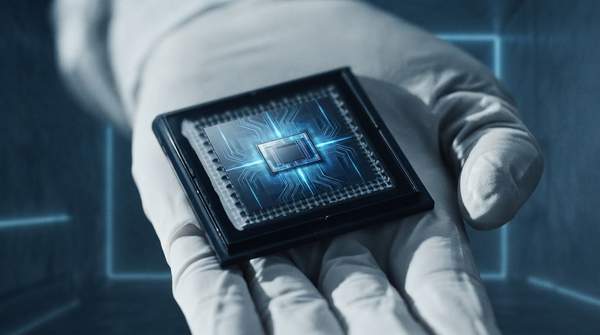
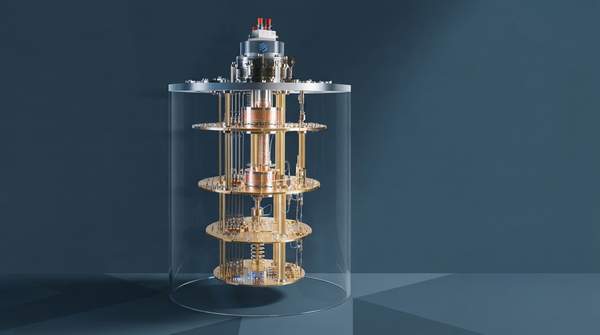
An eight-dot linear array of silicon spin qubits, manufactured using a standard 300 mm CMOS foundry process, has undergone successful tuning and coherent control. The successful tuning and coherent control of an eight-dot linear array of silicon spin qubits, detailed in Nature, is a significant engineering feat in the pursuit of scalable quantum computing. The fabrication method leverages established semiconductor manufacturing techniques, suggesting a pathway for the mass production of quantum hardware.
However, while silicon spin qubits demonstrate impressive coherence and compatibility with CMOS technology, the classical control required to manage these systems becomes exponentially complex as qubit numbers increase. This escalating challenge threatens to negate the inherent advantages of silicon-based architectures.
Therefore, the widespread adoption of quantum dot qubits for scalable quantum computing will depend on breakthroughs in automated and intelligent control systems, rather than solely on advancements in qubit fabrication.
What are Quantum Dot Qubits?
Semiconductor quantum dots (QDs) function by trapping individual charges, whose associated spins are then utilized as qubits, according to ZH Inst. The method of trapping individual charges in semiconductor quantum dots, whose associated spins are then utilized as qubits, leverages the intrinsic quantum properties of electrons confined within semiconductor structures. This fundamental approach, while elegant, still faces the practical challenge of precise, scalable control over these delicate quantum states.
Silicon spin qubits specifically trap single electrons within CMOS transistors to create these quantum bits. The integration of silicon spin qubits, which specifically trap single electrons within CMOS transistors to create these quantum bits, offers a direct path to merging quantum elements with existing silicon technology, streamlining manufacturing. The foundational mechanism relies on manipulating the electron's spin state, which provides a robust and well-isolated quantum bit.
How Quantum Dot Qubits Operate
Single qubit operations are initiated through an oscillating magnetic field, which couples to the qubits via microwave strip lines, as described by ZH Inst. This precise method allows for the individual manipulation of each quantum bit within an array. Such precise individual manipulation, however, becomes a formidable task when scaled to hundreds or thousands of qubits.

Researchers have also demonstrated a two-qubit gate operation between adjacent qubits, exhibiting low phase noise, according to Nature. Concurrently, readout for the central four qubits in an array is achieved through a cascaded charge-sensing protocol. The dual progress in both gate fidelity (demonstrated by a two-qubit gate operation between adjacent qubits with low phase noise) and measurement capability (achieved through a cascaded charge-sensing protocol for the central four qubits) is critical for advancing multi-qubit systems. This two-step process enables high-fidelity measurements, proving effective quantum information extraction.
The Intricate Challenge of Control
Devices in semiconductor quantum systems now incorporate tens of individual electrostatic and dynamical voltages that require meticulous adjustment. These settings are crucial for localizing the system into the single-electron regime and for achieving optimal qubit operational performance, as noted in PMC. The meticulous adjustment of tens of individual electrostatic and dynamical voltages in semiconductor quantum systems presents a significant practical hurdle.
The mapping of required quantum dot locations and charges to specific gate voltages presents a challenging classical control problem. Heuristic control methods become unfeasible with an increasing number of quantum dot qubits, according to PMC. The escalating complexity of classical control systems, where heuristic control methods become unfeasible with an increasing number of quantum dot qubits, bottlenecks the scaling of quantum dot qubit arrays beyond current experimental limits.
Architectural Innovations for Scalability
The control lines within certain architectures define the qubit grid, establishing a foundational structure for quantum information processing, as reported by Science | AAAS. The design choice to define the qubit grid with control lines within certain architectures aims to integrate qubit functionality directly into the device's physical layout. While promising, such architectural integration alone cannot circumvent the inherent complexity of individual qubit tuning.
Another advancement involves the ability to multiplex and simultaneously read out up to eight sensing dots, according to ZH Inst. Architectural and sensing innovations, such as the ability to multiplex and simultaneously read out up to eight sensing dots, aim to streamline the physical layout and data extraction, yet the underlying control challenge persists. The ability to multiplex and simultaneously read out up to eight sensing dots partially mitigates readout complexity in larger arrays. Intelligent architectural design and advanced sensing methods are critical for constructing larger, more integrated quantum dot qubit systems.
Performance Benchmarks and Error Correction
What are the key performance advantages of quantum dot qubits?
Quantum dot qubits demonstrate impressive coherence, with reported Ramsey dephasing times (T2*) reaching up to 41(2) microseconds and Hahn-echo coherence times (T2Hahn) extending up to 1.31(4) milliseconds, according to Nature. The reported Ramsey dephasing times (T2*) reaching up to 41(2) microseconds and Hahn-echo coherence times (T2Hahn) extending up to 1.31(4) milliseconds are crucial for maintaining quantum information during computations. Despite these impressive intrinsic properties, the practical realization of computations remains tethered to the external control apparatus.
Can quantum dot qubits meet quantum error correction thresholds?
An increasing number of spin qubit varieties have achieved single-qubit gate error rates low enough for quantum error correction. Concurrently, two-qubit gates have been performed with success rates between 90% and 95%, as detailed in arXiv. The collective progress in gate fidelity, with an increasing number of spin qubit varieties achieving single-qubit gate error rates low enough for quantum error correction and two-qubit gates performed with success rates between 90% and 95%, suggests a path toward meeting quantum error correction thresholds. The figures of single-qubit gate error rates low enough for quantum error correction and two-qubit gate success rates between 90% and 95% show quantum dot qubits approaching the performance levels necessary for practical error-corrected quantum computing.
The Future of Quantum Dot Qubits
By 2026, the widespread viability of large-scale silicon quantum dot systems will likely hinge on whether companies like Intel or IBM can demonstrate automated tuning protocols that drastically reduce the classical control burden.