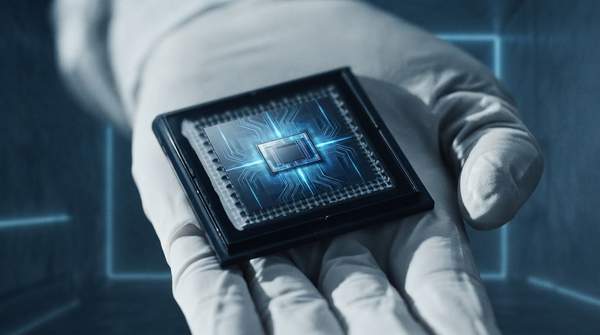
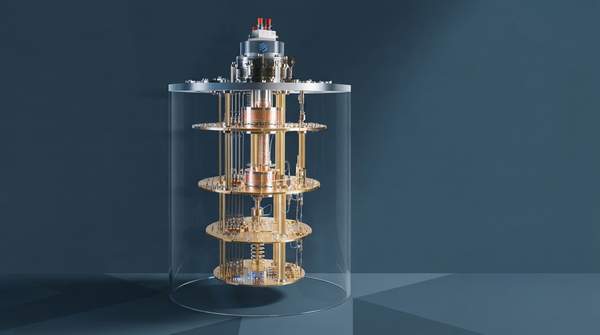
Google's 105-qubit Willow quantum chip completed a calculation in five minutes that would have taken the world's fastest classical supercomputer approximately 10 septillion years, according to Silicon Canals. This computational gulf, measured in quintillions of years, asserts the theoretical power of quantum processing for specialized tasks.
Google has presented this achievement as a clear declaration of quantum advantage, yet a significant segment of the research community remains skeptical regarding the sufficiency of the proof and the immediate practical applications.
While Google's achievement marks a critical theoretical advance, the path to widespread, practical quantum computing remains fraught with significant technical challenges and requires further validation from the broader scientific community.
The 'Quantum Echoes' Breakthrough
Google researchers assert their new algorithm, 'quantum echoes,' can address scientific challenges like deriving molecular structures, according to nature. These demonstrations utilized Google's 105-qubit Willow chip, employing superconducting circuits for quantum information storage. The 'quantum echoes' algorithm aims to shift quantum computing from abstract benchmarks to tangible scientific inquiry, a methodological advancement.
This algorithmic approach, executed on the Willow chip, offers a potential path for quantum processors to tackle complex chemical problems. However, its efficacy beyond idealized conditions remains under scrutiny within the scientific community.
Benchmarking the Unprecedented
- FIVE MINUTES — the time Google's Willow quantum chip required to complete a specific calculation, according to Silicon Canals.
- 10 SEPTILLION YEARS — the estimated time for the world's fastest classical supercomputer to complete the same calculation, as reported by Silicon Canals.
- RANDOM CIRCUIT SAMPLING (RCS) — the specific benchmark task performed, which Hartmut Neven, a key figure in Google's quantum efforts, characterized as 'the classically hardest benchmark that can be done on a quantum computer today,' according to Silicon Canals.
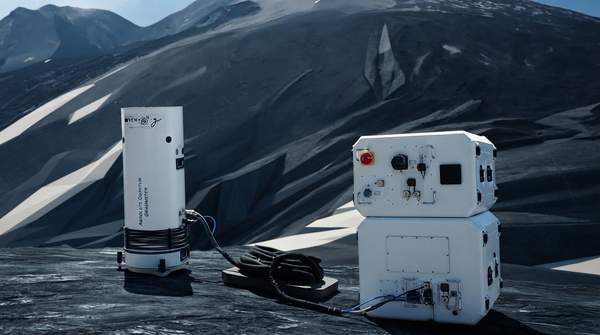
This vast computational disparity on a specific task confirms the highly specialized nature of the quantum advantage. While the benchmark is formidable, its direct applicability to real-world problems remains a distinct, and more complex, challenge.
Google's Optimism vs. Scientific Caution
Hartmut Neven, who leads Google's quantum-computing lab, confidently stated that the 'quantum echoes' algorithm offers an opportunity for real-world applications. Neven also expressed optimism for practical quantum computer uses within five years, a timeline reported by nature. This positions Google as a frontrunner, shaping public and investor expectations towards tangible, near-term utility.
Such pronouncements, while validating for the quantum research field, establish a high bar for future developments. The implied trajectory suggests investors in quantum solutions could see returns within a relatively short period, influencing capital flows into deep tech research.
The Broader Scientific View
The scientific community maintains a cautious stance on Google's quantum advantage declaration, diverging from the company's optimistic projections.
- Many researchers question the sufficiency of the proof provided for quantum advantage, according to nature.
- Others deem the promise of practical quantum computing use premature, as also reported by nature.
This widespread caution fuels the ongoing debate regarding quantum computing's immediate utility. The scientific community demands more rigorous validation and advancements beyond benchmark achievements before fully endorsing widespread practical applications, revealing a significant gap between industry aspirations and current capabilities.
The Road Ahead for Quantum Computing
Google's quantum advantage claim, while a monumental benchmark achievement, currently serves more as a marketing triumph than a practical scientific tool. The Willow chip's 105 qubits still require significant noise reduction or error correction for real-world molecular problems, as the 'quantum echoes' algorithm has only been successfully applied to simple molecules such as toluene, according to nature and Silicon Canals. This chasm between Google's five-minute, 10-septillion-year calculation and its current inability to apply it beyond 'simple molecules' suggests the quantum computing industry is still decades away from delivering on its grandest promises, despite optimistic timelines from industry leaders. Achieving practical application for more complex molecular systems necessitates either less noisy hardware or advanced error correction methods, as noted by nature.
Therefore, Google's ability to demonstrate a tangible application of its 105-qubit Willow chip beyond benchmarks by Q4 2026 will likely determine if it can overcome the prevailing scientific skepticism regarding practical quantum utility.