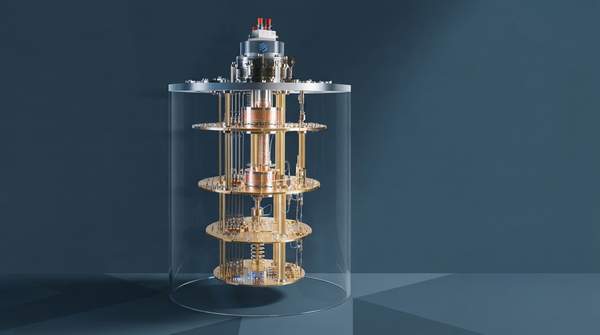
In 2019, Google achieved 'quantum supremacy,' a milestone where quantum computers solved problems beyond classical reach, according to Plainconcepts. This feat confirmed quantum mechanics' immense computational power. Yet, the path to practical, everyday quantum applications remains largely unbuilt.
Quantum hardware has indeed demonstrated unprecedented computational power. However, the software engineering practices required to make this power accessible, reliable, and cost-effective for industry are still nascent. A wide chasm separates theoretical capability from tangible, enterprise-grade applications, effectively trapping quantum computing's potential in academic benchmarks.
The true bottleneck for quantum computing's industrial impact is not hardware capability. It is the maturation of Quantum Software Engineering. A significant investment shift is imminent for those seeking real-world applications, particularly as industries aim to integrate advanced quantum software concepts by 2026.
What is Quantum Software Engineering (QSE)?
Quantum Software Engineering (QSE) is the specialized discipline for developing, deploying, and maintaining software on quantum computing platforms. It spans quantum algorithm design, robust tool creation, and application reliability. Industry adoption of quantum computers hinges on producing quantum software repeatably, efficiently, maintainably, and cost-effectively, as Arxiv highlights. Without these engineering practices, quantum hardware's raw power remains largely inaccessible for industrial utility.
The current lack of standardized methodologies and established best practices severely limits quantum software's broader application. QSE must bridge this gap, transforming experimental quantum demonstrations into reliable, scalable commercial solutions. This demands frameworks supporting the entire software lifecycle, from conceptualization and algorithm design to rigorous testing and deployment across diverse quantum architectures. The implication is clear: without a disciplined engineering approach, quantum computing will remain an academic curiosity rather than an industrial workhorse.

Navigating the Hybrid Quantum-Classical Landscape
Quantum software will likely adopt a hybrid model, seamlessly blending classical and quantum computing components, necessitating advanced interaction technologies, according to Arxiv. This architecture acknowledges quantum hardware's current limitations: it excels at specific tasks but relies on classical systems for orchestration, preprocessing, and post-processing. This inherent reliance on classical components means quantum solutions will always be part of a larger, complex system, not standalone magic boxes.
Integrating these disparate classical and quantum components demands robust QSE practices for efficient, reliable, and scalable system performance. Engineers must develop sophisticated interfaces and communication protocols to manage information flow between classical processors and quantum processing units (QPUs). This integration challenge includes optimizing data transfer, synchronizing computational steps, and effectively managing error correction—all critical for maintaining quantum state coherence. Without mastering this hybrid complexity, the promise of quantum speedup remains confined to isolated, academic demonstrations.
Quantum's Promise in Pharmaceutical Innovation
The pharmaceutical industry stands as a prime target for quantum computing, especially in drug discovery, given the quantum mechanical nature of molecular simulation, as EntangledFuture notes. Classical computers often fail to simulate molecular interactions with sufficient accuracy, making this a critical domain for quantum acceleration. The implication here is profound: quantum computing offers a path to fundamentally rethink drug design, moving beyond brute-force screening to predictive, atomic-level engineering.
QSE will be essential for developing the specialized algorithms and software tools needed to leverage quantum mechanics for these breakthroughs. This means creating sophisticated quantum chemistry software capable of modeling complex molecular structures and reactions, predicting material properties, and accelerating new drug candidate identification. The precise simulation of quantum phenomena at the atomic level promises to significantly reduce the time and cost of developing new therapeutics, potentially revolutionizing the entire R&D pipeline.
Beyond Drugs: Broader Industrial Impact
Engineering reliable quantum software will unlock innovation across diverse sectors, extending beyond healthcare into advanced materials science, finance, and logistics. Industries grappling with complex optimization problems—like supply chain management or financial modeling—stand to benefit significantly from mature quantum software capabilities. A fundamental shift in how industries approach intractable problems, moving from approximation to precise quantum-driven solutions, if the software can deliver.
In materials science, for example, quantum computing offers the potential to design novel materials with tailored properties by accurately simulating their quantum behavior. This capability could lead to advancements in areas such as high-temperature superconductivity or more efficient catalysts. However, realizing these benefits demands a rigorous approach to quantum software development, ensuring algorithms are robust, verifiable, and adaptable to real-world industrial constraints. Without this engineering discipline, these grand visions remain speculative, confined to theoretical models.
Common Questions About Quantum Software
What are the key concepts in quantum software?
Key concepts include qubits, storing information in quantum states. Phenomena like superposition allow a qubit to exist in multiple states simultaneously, while entanglement links qubits. Quantum gates, analogous to classical logic gates, manipulate these qubits, forming the basis of quantum algorithms.
What are the current capabilities of quantum software?
Current quantum software capabilities are largely defined by the Noisy Intermediate-Scale Quantum (NISQ) era. Quantum computers in this era have limited qubit counts and are error-prone. While theoretical algorithms like Shor's for factoring or Grover's for database searching exist, their practical, fault-tolerant implementation remains a future goal. Current efforts focus on variational algorithms for optimization and simulation, a pragmatic but limited approach.
What are the challenges in developing quantum software?
Challenges include the inherent difficulty of debugging quantum programs, given the probabilistic nature of measurements and the fragility of quantum states. Furthermore, the absence of mature, standardized development tools, programming languages, and robust error correction mechanisms severely complicates creating reliable, scalable quantum applications. This landscape demands a fundamental rethinking of traditional software development paradigms.
The Path Forward: Engineering Quantum's Future
The ultimate success of quantum computing in industry hinges less on isolated hardware feats and more on the diligent application of mature software engineering principles to real-world problems; therefore, if companies prioritize robust Quantum Software Engineering teams and invest in standardized tools, organizations like IBM and Microsoft, actively building quantum software development kits, will likely demonstrate significant advancements by the end of 2026, making quantum computing more accessible and accelerating industrial adoption.