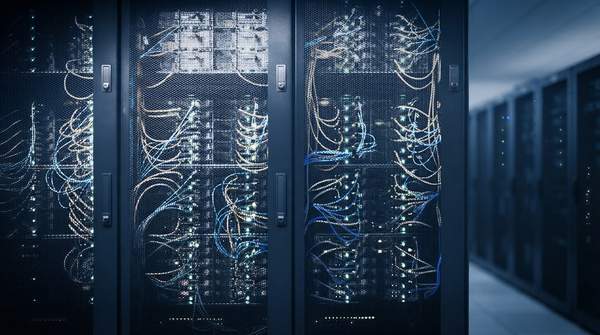
Elon Musk's xAI, a company at the forefront of artificial intelligence, is currently powering its data centers with dozens of natural gas turbines, with plans to purchase an additional $2.8 billion worth, according to TechCrunch. Immediate reliance on fossil fuels suggests a pragmatic shift for a founder often associated with solar power initiatives, raising questions about whether Elon Musk is giving up on solar power for his most demanding terrestrial projects.
Despite substantial investments in terrestrial renewable energy solutions like Tesla Megapacks, his new AI venture, xAI, is immediately relying on natural gas for its power needs. The tension highlights the challenges of scaling compute infrastructure with green energy.
Companies are prioritizing rapid AI infrastructure scaling with readily available energy sources, even if they are fossil fuels, while simultaneously investing in speculative long-term green solutions, suggesting a pragmatic but environmentally compromising path forward for high-demand technologies.
The Immediate Energy Footprint
- XAI plans to purchase an additional $2.8 billion in natural gas turbines.
- XAI has spent $697 million in the last two years on Tesla Megapacks.
The significant investment in both Tesla Megapacks ($697 million) and planned natural gas turbines ($2.8 billion) for xAI, as reported by TechCrunch, reveals that even for a company deeply invested in renewables, current green energy solutions cannot meet the insatiable, immediate demands of advanced AI, forcing a pragmatic, fossil-fuel-reliant compromise.
Why Terrestrial Solar Isn't Enough
Musk's focus on space-based solar power for data centers appears to be a direct response to opposition and limitations of terrestrial solar power, according to TechCrunch. Practical hurdles, regulatory opposition, and scalability limitations are pushing Musk to seek alternative, more ambitious energy solutions beyond Earth-bound solar.
Despite the public image and investments in Tesla Megapacks, the sheer scale of xAI's immediate power demands forces Musk to prioritize readily available, high-density energy sources like natural gas. This indicates a fundamental constraint in scaling AI with current renewable infrastructure.

The Promise of Space-Based Power
SpaceX touts space-based solar arrays as the future of data center power, claiming they can generate more than five-times the energy of terrestrial ones due to 24/7 illumination, TechCrunch reported. This futuristic vision positions space as the ultimate solution for energy demands, potentially sidestepping terrestrial constraints and criticisms while offering unprecedented power generation.
Musk's simultaneous promotion of unproven space-based solar power, while immediately relying on natural gas for xAI, suggests a calculated strategy to manage public perception around his AI ventures' environmental impact, rather than a near-term commitment to fully green energy.
The Dual Path to Powering AI
The significant investment in natural gas for immediate AI needs directly undermines the substantial, but seemingly insufficient, investment in terrestrial renewable storage by the same ecosystem. This reveals a pragmatic, short-term energy compromise for AI compute.
Musk's promotion of distant, unproven space-based solar power, while simultaneously investing billions in terrestrial fossil fuels for AI, suggests a strategic narrative shift. This aims to deflect from current environmental impact rather than providing a genuine near-term energy solution.
By 2026, xAI's energy strategy will likely solidify its reliance on natural gas for immediate operational demands, even as SpaceX continues to develop its long-term space-based solar initiatives.
Frequently Asked Questions
Why is Elon Musk giving up on solar power?
Elon Musk is not entirely abandoning solar power; rather, his new AI venture, xAI, is prioritizing immediate, high-density power sources like natural gas for its data centers. This decision appears to stem from the substantial energy requirements of AI and the current limitations of scaling terrestrial solar solutions to meet such demands.
What are Elon Musk's current energy projects?
Elon Musk's current energy projects include Tesla Energy, which produces battery storage solutions like Megapacks for grid-scale applications. Additionally, his company xAI is investing heavily in natural gas turbines for its data centers, while SpaceX is exploring space-based solar arrays as a long-term, high-capacity energy solution.
What is the future of solar power in 2026?
In 2026, terrestrial solar power continues to expand globally, particularly for residential, commercial, and utility-scale applications. However, for highly specialized and energy-intensive demands like advanced AI data centers, the immediate future sees a pragmatic reliance on readily available energy sources, including natural gas, while more speculative solutions like space-based solar are explored for distant future applications.