Choosing between multi-cloud and hybrid cloud for a SaaS application is not a single decision but a mapping exercise: each business driver—data residency, provider resilience, specialized AI workloads, or global low-latency serving—points to a specific, documented architectural pattern. Scopic's comparison of the two models frames the core distinction: hybrid deployments are typically driven by data residency and workload placement constraints, while multi-cloud strategies leverage specific capabilities across multiple public-cloud ecosystems. This article lays out the named patterns, the decision framework connecting them to business scenarios, and the data consistency and latency trade-offs each one carries.
Understanding Multi-Cloud and Hybrid Cloud for SaaS
The two models are frequently conflated, but they solve different problems. Microsoft's Azure cloud computing dictionary defines multi-cloud as using multiple public or private cloud providers, emphasizing vendor diversity, industry-leading services, and resilience, while noting that a private cloud in a multi-cloud estate is not necessarily integrated with the other environments at the architectural level. Hybrid cloud, by contrast, combines public and private environments with tight integration, supporting workload portability and data synchronization between on-premises systems and cloud platforms, and is often used in industries with high security or regulatory demands such as finance and healthcare.
For SaaS builders, the practical implication is that hybrid architectures are usually a compliance instrument—keeping selected workloads or data in private or local placement—whereas multi-cloud is a capability instrument. Teradata's guide to multi-cloud analytics describes the underlying benefits as avoiding lock-in and expanding choice, allowing an organization to match cloud compute and storage to particular data sources and business requirements for each analytics workload. Scopic adds an important caution: application portability, operational resilience, and reduced vendor lock-in are deliberate design outcomes, not automatic benefits, and organizations should select the least complex architecture that satisfies their requirements.
SaaS Multi-Cloud and Hybrid Cloud Decision Framework
The framework below maps the primary business drivers a SaaS team faces to a recommended architectural starting point, the technical validations that must be performed before committing, and the pitfalls most commonly encountered. It synthesizes Scopic's scenario-based guidance with the named deployment patterns documented by Cloudera. The mapping logic is straightforward: identify the dominant constraint first (regulation, failure model, workload specialization, or latency), then validate the technical dependencies listed before selecting the pattern.
| Business Scenario | Recommended Architecture | Key Considerations | Common Pitfalls |
|---|---|---|---|
| Regulated or data-sensitive workloads | Hybrid, or multi-cloud with regulatory distribution | Residency, data flows, encryption and key management, IAM, audit controls, eligible providers and regions, recovery requirements | Policy drift; re-identification risk when sharing masked or aggregated outputs |
| Geographic or provider resilience | Multi-region single-cloud, or multi-cloud cross-cloud disaster recovery when provider concentration is itself an unacceptable risk | RTO/RPO, replication, failover, DNS, identity, data consistency, provider-independent dependencies, DR testing | Version drift between environments; untested restores |
| Specialized workloads (AI/ML, analytics) | Multi-cloud best-of-breed analytics | Data location, egress, accelerator availability, privacy, latency, model access, pipelines, observability | Egress costs; schema drift between clouds |
| High performance, low latency, global reach | Active-active web tier, or multi-tenant SaaS with regional shards | Global load balancing, shared identity (OIDC), stateless sessions or replicated cache, shard-aware routing | Split-brain writes; sticky session issues; misrouted tenants; noisy neighbors |
Two rows deserve emphasis. For resilience, Scopic notes that multi-cloud is justified only when provider concentration itself is an unacceptable risk; otherwise, multi-region resilience within one provider can be simpler. And for regulated workloads, Cloudera's regulatory distribution pattern keeps sensitive data in-region and shares only masked or aggregated outputs, using regional data planes, policy-as-code, and tokenization.
Key Multi-Cloud and Hybrid Cloud Architectural Patterns
Cloudera's catalog of multi-cloud deployment patterns provides the concrete designs behind the framework. Best-of-breed analytics uses one cloud for AI accelerators and another for warehousing or lakehouse storage, relying on open table formats, identity federation, and planned bulk moves. Bursting and seasonality runs steady state on a primary cloud and bursts to a secondary during peaks, with a single infrastructure-as-code codebase, mirrored images, and autoscaling—while watching for cold starts and sudden egress charges.
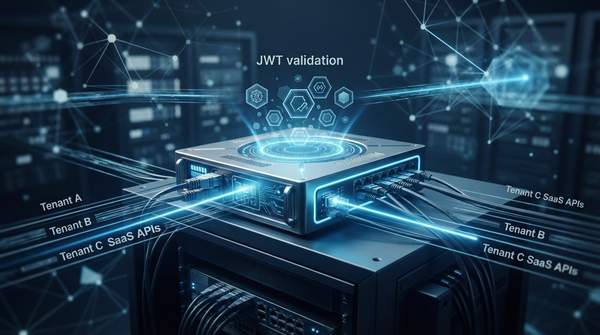
The two patterns most relevant to SaaS serving tiers are the active-active web tier, which serves traffic from multiple providers with global health checks and shared identity, and multi-tenant SaaS with regional shards, which routes tenants to regional shards for latency or compliance isolation using shard-aware routing, per-shard keys, and scoped tokens. Cross-cloud disaster recovery keeps a warm standby in a second cloud for provider or region failure, built on log shipping or replication, IaC rebuilds, and tested runbooks. Each pattern trades operational complexity for a specific benefit—Cloudera's own summary is that multi-cloud is a set of architectural and operating choices that trade complexity for choice, resilience, and regulatory fit.
Data Synchronization and Consistency in Multi-Cloud Architectures
Data synchronization is where these patterns succeed or fail. The fundamental choice is between consistency models. HostMyCode's guide to multi-cloud database replication notes that active-active replication, which distributes write operations across multiple cloud providers simultaneously, works well for read-heavy workloads where eventual consistency is acceptable, with PostgreSQL logical replication plus conflict resolution strategies making it feasible for specific use cases. For applications requiring strict consistency, the same guide points to the distributed transaction pattern using two-phase commit protocols across cloud boundaries—a heavier but safer option.
Oracle's database engineers, Pankaj Chandiramani and Deeksha Sehgal, describe a middle path in their multi-region architecture: each cluster operates as an independent Raft group, providing synchronous, strongly consistent replication within a region and asynchronous replication across regions. This decouples regions operationally while maintaining a single logical database. Their active-passive multi-region model is particularly well suited, they write, for workloads that require strong consistency, predictable write behavior, and simplified operations without cross-region conflict resolution. Streamkap's practitioner guidance, authored by Ricky Thomas, recommends starting with a single-region active-passive setup with change-data-capture streaming to analytics and downstream systems, and going multi-region only when a clear business requirement justifies the operational cost—while observing that most production architectures end up combining multiple patterns, which is the reality of running systems with different consistency and latency requirements rather than a design failure.
Mitigating Network Latency and Ensuring Resilience
Latency mitigation in these architectures is largely a matter of placement and replication topology. The active-active web tier pattern addresses latency by serving traffic from multiple providers with global health checks; the sharded SaaS pattern addresses it by routing tenants to regional shards. The consistency model chosen determines how much latency the data plane adds: synchronous replication within a region keeps writes fast and strongly consistent, while asynchronous cross-region replication avoids inter-region round trips at the cost of a replication lag window.
Resilience is measured in two metrics, as Oracle's engineers define them: RPO, how much data you can afford to lose, and RTO, how fast you can be back online. Meeting near-zero RPO and low RTO across multi-region deployments, they argue, requires continuous asynchronous replication across independent clusters, each with built-in fault tolerance. HostMyCode describes the primary-backup failover pattern, which keeps one cloud provider as the active database host with synchronized standby replicas elsewhere, promoting a replica during failures with minimal downtime. Motherson Technology Services adds that established provider frameworks, such as the AWS Well-Architected Reliability Pillar, contain transferable principles for multi-cloud resilience, beginning with foundations: service quotas and network topology that accommodate workload requirements and growth.
Choosing Your Multi-Cloud Path: A Strategic Decision
Architects and engineers should select a multi-cloud or hybrid-cloud strategy by aligning specific business requirements—data residency, disaster recovery, specialized workloads—with documented architectural patterns and their operational implications. The evidence converges on a clear sequence: start with the least complex architecture that satisfies your requirements, validate residency, identity, and latency tolerances before committing, and reserve active-active or cross-cloud disaster recovery for cases where the failure model or compliance regime genuinely demands them. The measurable indicator of success is a SaaS deployment that meets its defined RPO/RTO objectives and compliance requirements across multiple cloud environments—so define those objectives numerically before selecting a pattern, and test the restores and failovers the pattern promises.
Sources
- Multi-Cloud vs Hybrid Cloud: Which Architecture Fits Your Business? — Scopic
- What is multicloud? — AZURE
- Multi-Cloud and the Future of Analytics — Teradata
- What Is Multi-Cloud? — Cloudera
- Multi-Cloud Database Replication Architecture in 2026: Strategic Implementation Guide for Enterprise Reliability — HostMyCode
- From HA to Multi-Region: Always-On Distributed Databases with Asynchronous Raft Replication — BLOGS
- Database Replication Patterns: Active-Active, CDC, and Beyond - Streamkap
- Simple Ways to Keep Multi-Cloud Operations Running Smoothly — Motherson Technology Services