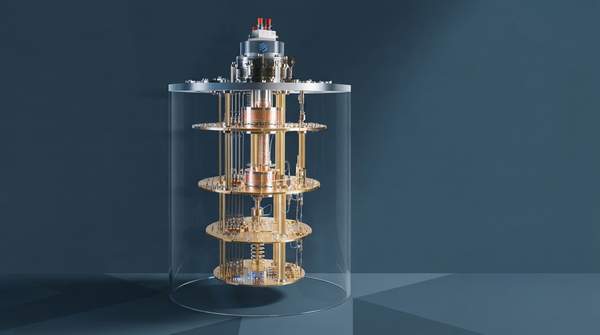
Scientists are increasingly turning to a new tool to design the advanced materials needed for next-generation solar cells, electronics, and energy storage: quantum computers. By directly simulating the complex quantum mechanical interactions that govern a material's behavior, these machines are beginning to solve problems that have long stymied even the most powerful classical supercomputers. This approach allows researchers to predict and optimize material properties before they are ever synthesized in a lab, accelerating a discovery process that has historically relied on trial and error.
The Quantum Advantage in Material Science
The study and design of novel materials is a foundational challenge in chemistry and physics, where researchers work to connect microscopic quantum interactions to measurable, real-world properties. According to IBM Research, while computer simulations are essential for complementing experimental data, classical computers struggle to accurately model the subtle quantum phenomena that define many advanced materials. The computational resources required to simulate these systems scale exponentially with their size, quickly overwhelming conventional machines.
Quantum computers, however, operate on the same principles of quantum mechanics they are being asked to simulate. This native advantage makes them uniquely suited for tackling these challenges. Simulating the Hamiltonian dynamics—the evolution of a quantum system's total energy—is one of the most promising applications for digital quantum computers, as described in a 2020 dissertation from the University of Maryland. By implementing a model of a material's Hamiltonian on a programmable quantum platform, scientists can explore its properties and phase diagrams in ways that are otherwise computationally intractable.
Quantum Material Simulation Workflow
The process of using a quantum computer to design a new material is a systematic, multi-stage effort that blends quantum computation with classical analysis. This hybrid workflow translates a real-world material science challenge into a quantum algorithm, executes it on quantum hardware, and validates the results against physical experiments.
1. Identify the Material Property
The journey begins by translating a "wish list" of desired material characteristics into a quantifiable target. As outlined in a 2026 paper posted to alphaXiv by Christian Kokail and colleagues, this involves encoding the target properties—such as high efficiency in a solar cell or a specific magnetic response—into a mathematical cost function. This function serves as the benchmark for the simulation, measuring how well any given quantum state exhibits the desired traits.
2. Define the Quantum Problem
Next, the problem is categorized as either static or dynamic. As explained in a PennyLane AI blog post, static problems typically involve calculating a material's stable, lowest-energy state, known as its ground state. Dynamic problems, in contrast, simulate how a material's quantum state evolves over time, which is crucial for understanding chemical reactions, light absorption, or energy transfer.
3. Develop the Hamiltonian Model
With the problem defined, researchers specify a model Hamiltonian to mathematically represent the quantum system's energy and the interactions between its particles. This model is the core of the simulation, and its accuracy is critical for producing realistic results that can be compared to experimental properties. This Hamiltonian is then encoded in a format that can be implemented on a quantum computer.
4. Design the Quantum Algorithm and Circuit
A specific quantum algorithm is then designed to solve the problem defined by the Hamiltonian. For dynamic problems, this might involve algorithms based on product formulas that implement time evolution. Researchers must also consider the limitations of current quantum hardware, designing circuits with a depth and complexity that near-term devices can handle. A 2023 paper in Nature Communications highlights how techniques like hybrid fermion-to-qubit mappings and efficient compilers can leverage a material's physical properties to generate more compact quantum circuits.
5. Execute on Quantum Hardware
The designed quantum circuits are then run on a programmable quantum processor. These platforms are engineered to be versatile, allowing them to simulate a broad class of Hamiltonians for different materials. The computation itself involves preparing an initial quantum state and evolving it according to the instructions encoded in the algorithm, followed by measurements to extract the result.
6. Validate Against Experimental Data
Finally, the computational results must be validated to ensure they provide physically meaningful answers and are not artifacts of hardware noise or algorithmic errors. This crucial step involves comparing the simulation's output with data from physical experiments. For example, a recent collaboration involving researchers from Oak Ridge National Laboratory and IBM used an IBM Quantum Heron processor to compute the energy-momentum spectrum of the magnetic material KCuF₃. They found strong agreement with spectra measured via neutron scattering, demonstrating the power of quantum simulation to reproduce and explain experimental observations.