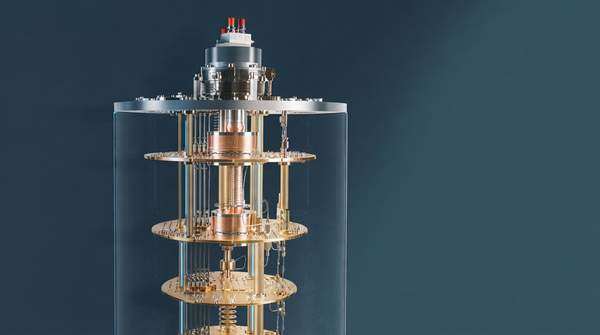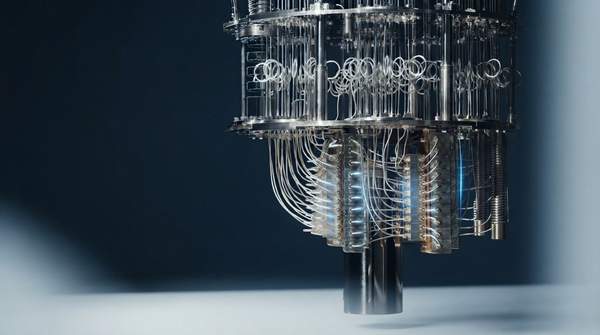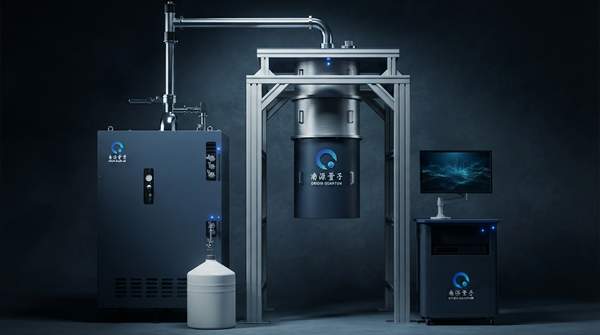
Superconducting quantum computers run inside dilution refrigerators because their qubits only behave quantum-mechanically at temperatures within a few thousandths of a degree of absolute zero. The refrigerator achieves this not with a single cooling step but with a closed-loop cycle in which helium-3 circulates through a sequence of progressively colder components—a pulse tube cryocooler, a still, heat exchangers, and finally a mixing chamber where the actual millikelvin cooling is generated. Understanding that cycle, and the cooling power it delivers, is essential to understanding why scaling quantum computers is as much a cryogenic engineering problem as a qubit problem.
The Quantum Imperative: Why Extreme Cold is Essential
Many qubit modalities require operation at ultra-low temperatures to preserve their delicate quantum properties and enable accurate computation, as the cryogenics manufacturer Kiutra explains in its technical overview of quantum cooling. The challenge is not incidental to the technology: maintaining qubits close to absolute zero is what minimizes errors and allows the desired quantum effects to appear at all. A qubit's quantum state—its capacity to exist in a superposition and to entangle with neighbors—is precisely the property that makes it useful, and precisely the property most vulnerable to disturbance.
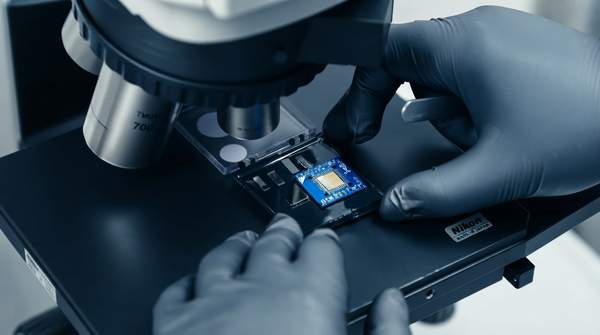
The specific threat is decoherence. Kiutra describes maintaining qubits at extremely low temperatures, often near absolute zero, as paramount in mitigating the adverse effects of noise and decoherence, which can disrupt the delicate quantum states on which computation depends. Thermal energy from the environment is one such source of disturbance, so the practical response is to remove it: the colder the qubit's surroundings, the less thermal noise remains to corrupt its state. As quantum processors tackle increasingly complex tasks, the company notes, this demand has driven a dedicated quantum cooling industry—cooling is not only needed for operational machines but also for testing, measuring, and characterizing quantum components during research and development.