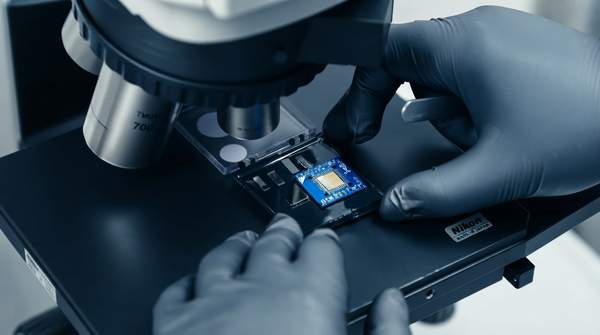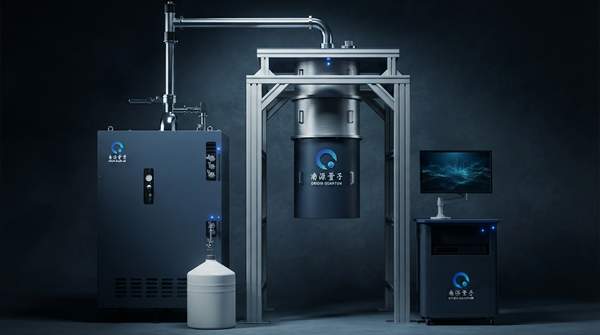
A deep tech startup is a venture built on a scientific discovery or engineering breakthrough rather than a business model, and it demands a different kind of evaluation than an ordinary technology company. Because the core risk is technical—whether the science will actually work outside a laboratory—the most useful assessment tool is the Technology Readiness Level (TRL) scale, the nine-step maturity system originally developed by NASA. Deep tech ventures typically begin at TRLs 1–3, in the research and proof-of-concept phase, where milestones, risks, and appropriate funding sources look nothing like those of a software startup seeking product-market fit.
What Defines a Deep Tech Startup?
The distinguishing feature is the foundation. Deep tech companies are founded on scientific discoveries and engineering breakthroughs, rather than on a new way of delivering an existing product. That origin shapes everything else: the technology itself often requires deep domain expertise to understand and validate, and many such ventures begin with extensive prototyping and testing before anything resembling a shippable product exists.
The risk profile follows from the foundation. Investors in this space, as one venture capital guide puts it, are "not just looking for rapid growth or early exits" but backing companies that may take years to reach market readiness. Unlike traditional startups, where traction metrics, user growth, or product-market fit can guide decisions, deep tech evaluation revolves around unproven or complex technologies, so investors must scrutinize both the business model and the scientific credibility of the core innovation through a process of scientific due diligence.
Two further characteristics complete the picture. The underlying scientific or engineering problems these companies solve generate valuable intellectual property that is hard to reproduce, which makes that IP a core asset and differentiator. And scalability is a genuine technical question, not a business question: as Rami Ali explains in NetSuite's startup guide, "Technology that works in a lab doesn't necessarily work at commercial scale," so investors must determine whether a solution can be manufactured or deployed without losing performance or becoming cost-prohibitive.