Achieving and maintaining ultra-low temperatures is fundamental to the operation of quantum computers, as it is essential for preserving qubit coherence and minimizing error rates. Two primary cryogenic technologies, dilution refrigerators and pulse tube cryocoolers, play distinct yet often complementary roles in creating the extreme cold environments necessary for quantum computation.
Dilution refrigerators are the gold standard for reaching millikelvin temperatures, crucial for superconducting qubits, while pulse tube cryocoolers provide efficient, low-vibration precooling, often forming the foundation of modern "dry" cryogenic systems. Understanding their operational principles, temperature ranges, cooling power, and vibration characteristics is key to appreciating their impact on qubit performance and the scalability of quantum computing architectures.
The Cryogenic Imperative in Quantum Computing
Quantum computers rely on qubits, which are highly sensitive to thermal disturbances. To maintain their delicate quantum states and enable longer coherence times, these qubits must operate at temperatures extremely close to absolute zero, often in the millikelvin (mK) range, according to Quera. This extreme cold minimizes thermal noise, which can otherwise disrupt quantum operations and introduce errors. Different qubit technologies, such as superconducting qubits and trapped ions, have specific cryogenic requirements, with superconducting qubits typically needing temperatures around 20 mK.
The complexity of these cooling systems, their energy consumption, and the need for meticulous vibration isolation and thermal conductivity management are significant challenges in designing and maintaining quantum computing infrastructure, as Quera explains. Effective cryogenic cooling allows for higher fidelity quantum operations and improves the overall performance of quantum computers.
Dilution Refrigerators: Achieving Millikelvin Temperatures
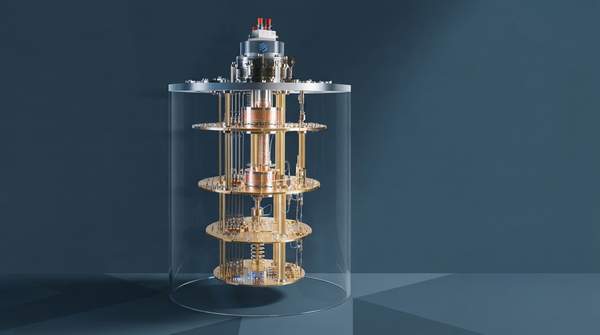
Dilution refrigerators (DRs) are specialized cryogenic devices designed to achieve ultra-low temperatures, typically in the millikelvin range, just thousandths of a degree above absolute zero. This makes them the most reliable and widely used method for operating superconducting qubits and other quantum devices, as SpinQ highlights. The operational principle of a dilution refrigerator is based on the unique physical properties of a mixture of helium's two stable isotopes: helium-3 (³He) and helium-4 (⁴He) at extremely low temperatures, according to Insight-Ihbar and Quera.
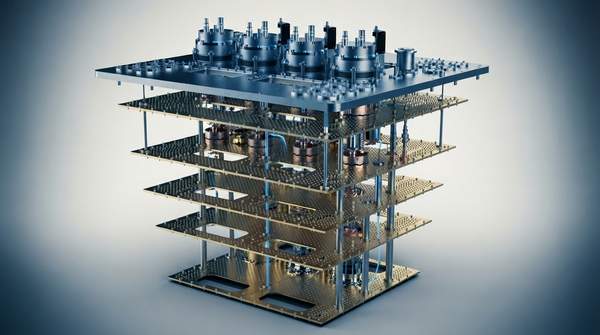
The cooling power in a DR comes from the heat of mixing as helium-3 atoms dissolve into a dilute phase within helium-4. This process, which has no moving parts in the low-temperature region, provides continuous cooling to temperatures as low as 2 mK, as described by Kiutra. The coldest stage, known as the Mixing Chamber (MXC) plate, operates around 10–20 mK and is where critical components like the qubit chip are mounted, serving as the core operational and heat-sinking layer, Insight-Ihbar notes. Modern systems are often "dry," meaning they use a closed-cycle pulse tube dilution refrigerator design, eliminating the need for constant liquid helium refills, according to Quera.